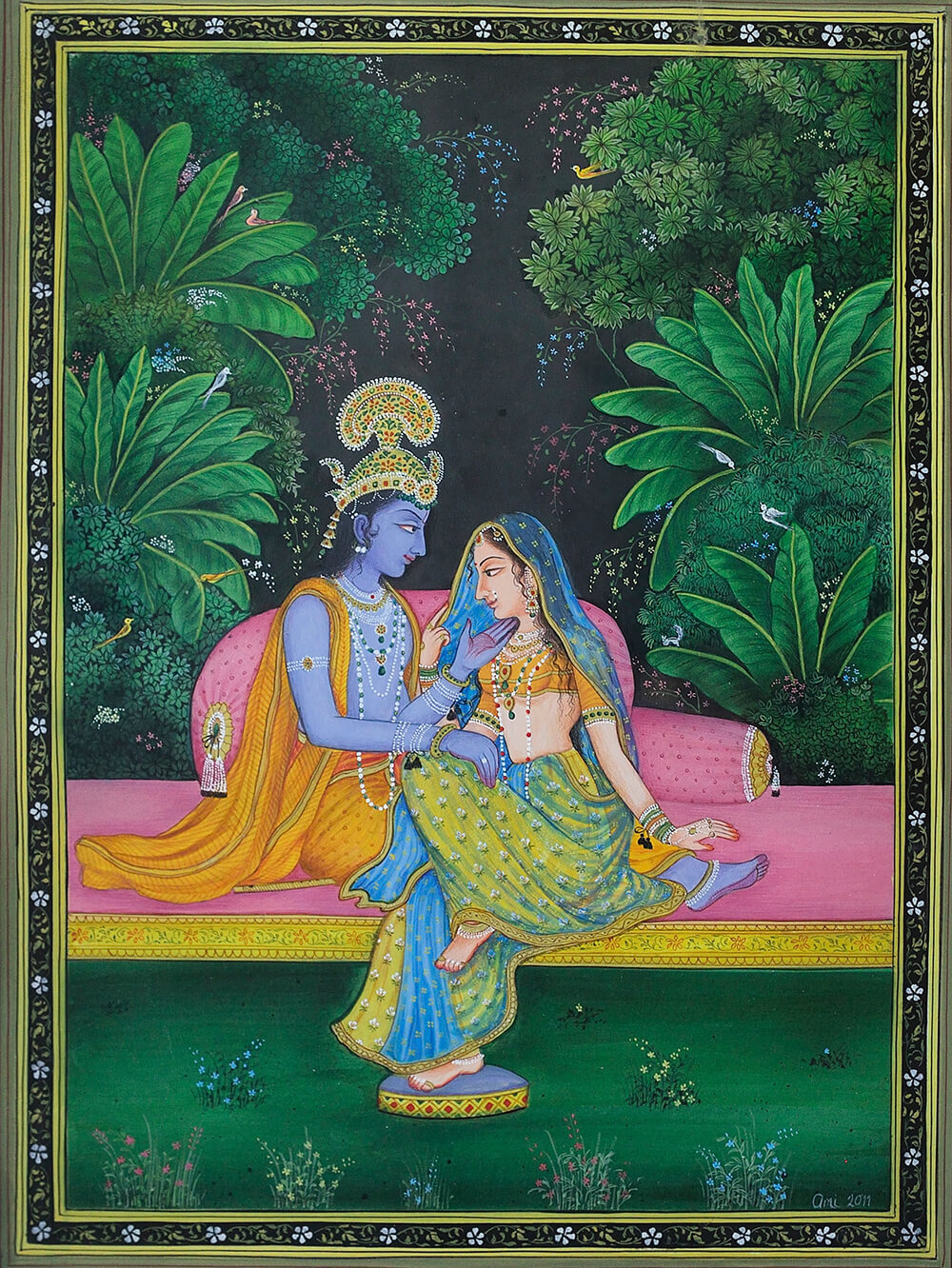
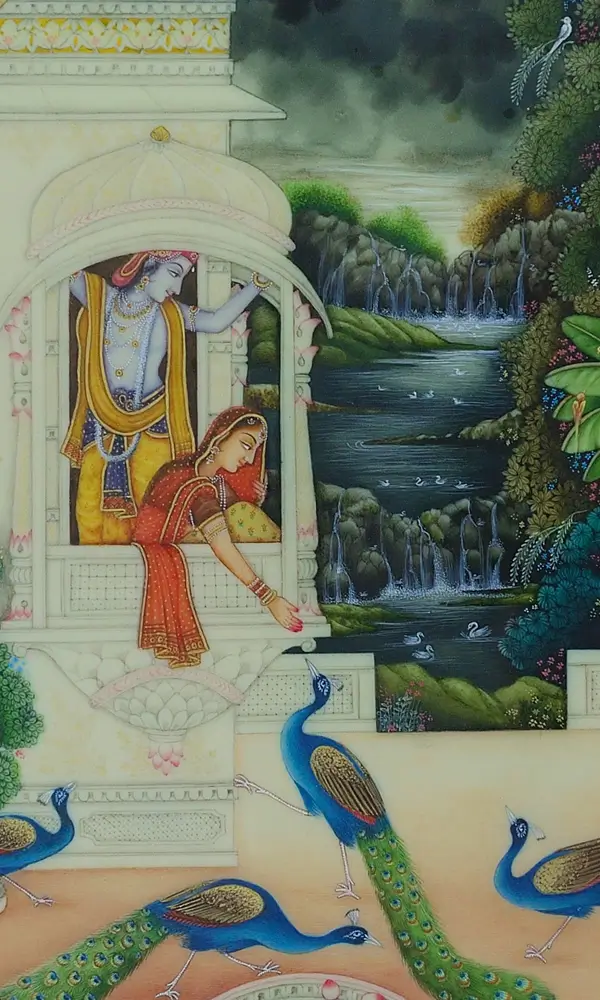
Indian paintings have been variously described: as layered objects in which one thing, or thought, is gently laid upon another; like schist rocks, foliated and iridescent; like a couplet in Persian or a doha in India, terse but meaningful; like a great floral carpet that lies rolled up but can be spread out endlessly, revealing new things with each mellow unfurling.Indian paintings have been variously described: as layered objects in which one thing, or thought, is gently laid upon another; like schist rocks, foliated and iridescent; like a couplet in Persian or a doha in India, terse but meaningful; like a great floral carpet that lies rolled up but can be spread out endlessly, revealing new things with each mellow unfurling.
Each description is seductive, and contains much truth. They are also in their different ways saying a single thing—a painting presents to us a layered world of meaning.
However imperfect the description might be, works on paper that make up the vast majority of Indian paintings go by the name of ‘miniatures’. They can vary greatly in size—from being smaller than postcards or, in some cases, not appreciably larger than outsized postage stamp to being close to a metre in height.